Institute for the Study of the Continents (INSTOC)

|
Institute for the Study of the Continents (INSTOC) |
|
||
| ...to stimulate and facilitate research on the structure and evolution of Earth's continents. | |||
|
|
|
Home
|
|
|
| The scientific
goals of the Institute for the Study of the Continents (INSTOC) at Cornell
University are to stimulate and facilitate research into the structure and
evolution of the continents, to attract world-class scientists to pursue
that research at Cornell, and to enhance Cornell's competitiveness in attracting
funds to support that research. INSTOC's main mission is to promote innovative
research into the structure and geologic evolution of the continents.
Since its inception in the early 1980s, INSTOC has served as a mechanism for the development and training of scientists in the field of continental exploration. The original scientific rationale for INSTOC is as valid as ever: the continents remain a key frontier for important, large-scale geoscience investigations, a frontier that hosts most of our natural resources and most natural hazards. INSTOC organizes several programs in order to reach its goals: the Jack E. Oliver Honorary Visiting Professor, visiting professors/scientists, annual roundtables, and frequent INSTOC research seminars. An affiliate of the Department of Earth and Atmospheric Sciences (EAS), INSTOC has served as the base for major interdisciplinary research programs in the Andes (South America), the Himalayas and Tibet Plateau (China), the Middle East (Syria, Lebanon), and Taiwan. New initiatives are being developed in the Caribbean, India, and Africa. INSTOC also hosts annual international workshops on frontier issues in contemporary geodynamics research. See www.eas.cornell.edu
for more information. |
|
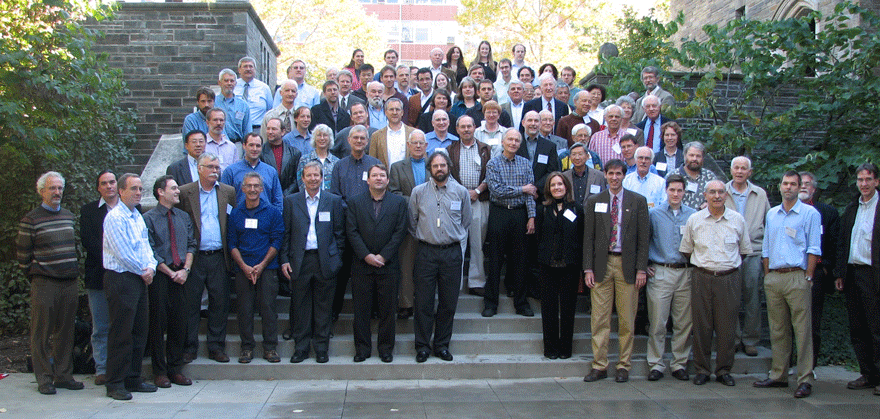
Photo taken outside of the Cornell Law School
during the INSTOC symposium: Subduction,
Orogeny, and the Surface of the Earth: A Symposium in Honor of Bryan Isacks
(October 2006) Click on the photo to see more pictures from the event.. Last modified: Dec. 2024
|